 +91-9580 374 374
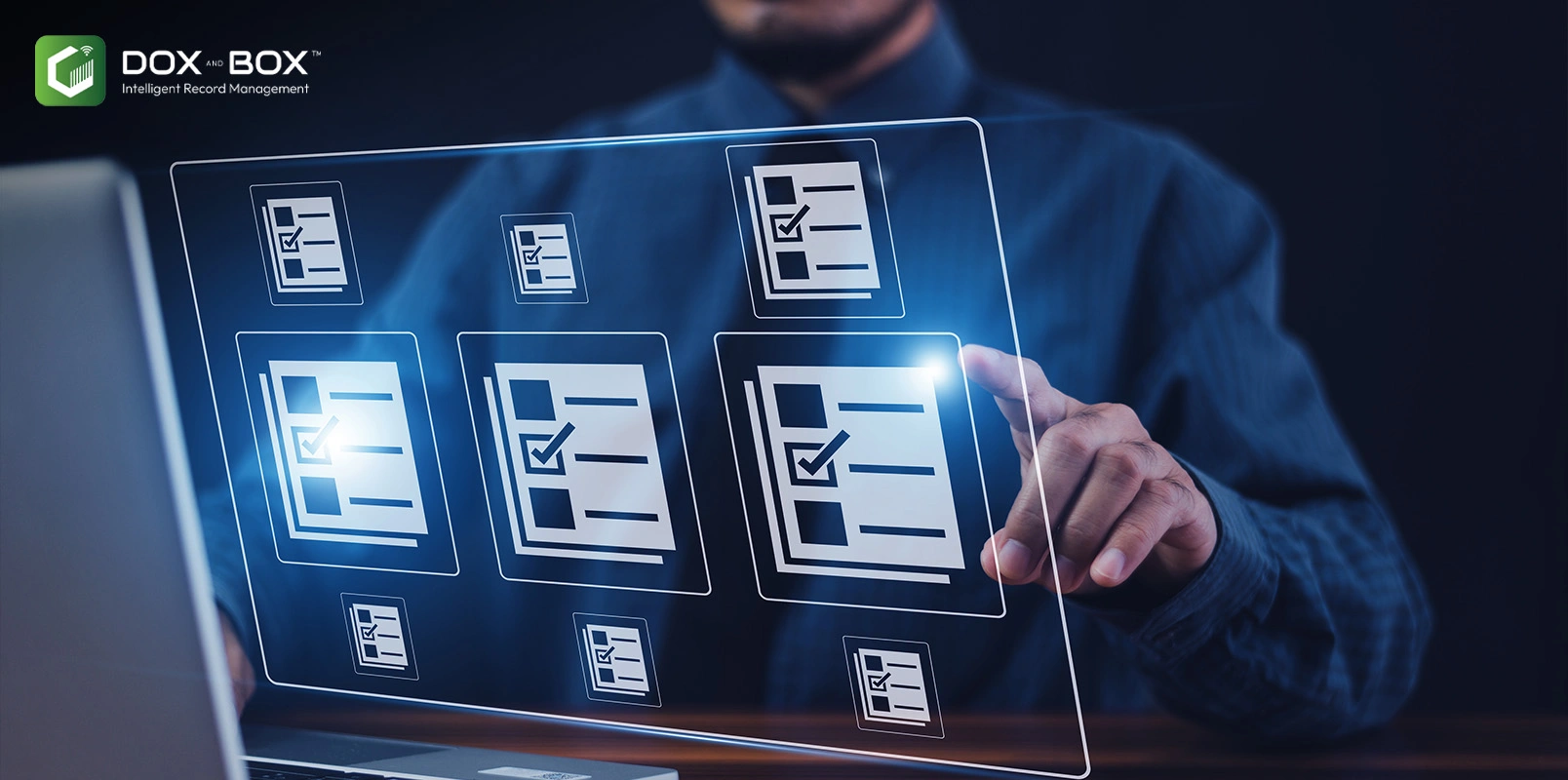
The world of data management is changing fast. Most businesses today deal with thousands of physical and digital files. Keeping track of these records is a huge challenge. A new concept called digital twins is now entering the world of document management. This technology creates a virtual model of a physical object or system. When applied to document repositories, it changes how we store and find information. It creates a bridge between physical paper and digital data. This shift is vital for companies that want to stay ahead in the modern market.
Understanding Digital Twins in Document Management
A digital twin is more than just a scanned copy of a page. It is a live digital version of a document system. It captures the data, the context, and the history of every record. This technology allows businesses to see their entire archive in a virtual space. It helps in tracking how documents move and how people use them. By using this method, firms can predict future needs for storage or security.
- Digital twins use sensors and AI to update data in real time.
- They provide a 3D view of how files are organized in a warehouse.
- This system helps in finding lost or misplaced files quickly.
- It reduces the time spent on manual inventory checks.
How Search Changes with Digital Twins
Traditional search methods often fail when dealing with large volumes of paper. You might know a file exists, but cannot find its exact location. Digital twins solve this problem by adding layers of metadata to every record. This makes the search process much more precise. You are not just searching for words on a page. You are searching for the document’s physical location and its relationship with other files.
Many document digitization companies are now focusing on these advanced search features. They help businesses convert old paper piles into smart digital assets. When you use these tools, your search results become more accurate. You can find a specific contract or invoice in seconds. This saves hours of labor every single week.
The Role of Analytics in Modern Repositories
Analytics is the process of finding patterns in data. With a digital twin, analytics becomes much more powerful. You can analyze the "health" of your document repository. For example, you can see which files are accessed most often. You can also see which documents are reaching their legal disposal date. This level of insight was impossible with old filing cabinets.
- Predictive analytics can tell you when a storage facility will be full.
- Security analytics can flag unauthorized attempts to view a file.
- Workflow analytics show where bottlenecks happen in document processing.
- Cost analytics help in reducing the expenses of physical storage.
Why Should Businesses Move Beyond Simple Scanning?
You might wonder if scanning a document is enough for a modern office. While scanning is a good start, it is often not enough for deep analysis. A simple scan is just a picture. A digital twin is a data-driven model. This is where document digitization services provide the most value. They ensure that every bit of information is captured and indexed correctly.
According to a report by Gartner, the digital twin market is expected to grow by nearly 30% annually through 2027. This growth shows that more industries are seeing the value of virtual models. By choosing the right document digitization companies, a business can ensure its data is ready for the future.
Improving Accuracy with Advanced Technology
Accuracy is the biggest concern in record management. One small error in filing can lead to a big legal problem. Digital twins reduce human error by automating the indexing process. The system checks for duplicates and ensures that every file is in the right category. This high level of precision is why many firms look for document digitization companies in India to handle their large-scale projects. These experts use high-end scanners and AI software to maintain quality.
- Automated indexing removes the risk of typing errors.
- Optical Character Recognition (OCR) turns images into searchable text.
- Version control ensures you are always looking at the latest document.
- Digital timestamps provide a clear trail of who opened a file and when.
The Impact on Decision Making
How does having a virtual map of your files help your CEO? It helps by providing instant answers. Managers do not have to wait for a clerk to find a box in a basement. They can look at the digital twin and see the data immediately. This speed allows for faster decision-making. In a competitive world, speed is a major advantage.
"The digital twin is not just a replica of a product. It is a window into the state and behavior of the physical world," says Dr. Michael Grieves, who is widely credited with originating the digital twin concept. This quote highlights that a digital twin is an active tool, not a static file. When Dox and Box implement these systems, they provide a live view of information assets.
The Future of Global Document Standards
Is it possible for every company to have a digital twin of its records? The trend suggests that this will soon be the standard. Global regulations on data privacy are becoming stricter. Companies must know exactly what data they have and where it is stored. Dox and Box help businesses meet these legal requirements through smart storage solutions.
Statistics from the International Data Corporation (IDC) show that by 2025, over 80% of all data will be unstructured. This includes emails, PDFs, and paper documents. Managing this "dark data" is only possible with advanced digital models. Using document digitization companies is the first step in turning this messy data into a useful resource.
How to Start the Transformation
Moving to a digital twin system might seem hard, but it happens in stages. First, you must clean up your existing physical files. Then, you need to digitize them using high-quality tools. Finally, you integrate them into a management system that supports virtual modeling. Dox and Box assist organizations at every stage of this journey.
- Start with a pilot project for one department.
- Choose a partner that understands your specific industry needs.
- Train your staff on how to use the new virtual interface.
- Regularly update the digital twin to reflect new physical additions.
Shaping the Future of Data Mastery
Digital twins are changing the face of document management. They turn old, dusty archives into vibrant, searchable data hubs. This technology makes search faster and analytics deeper. It provides a level of control that was never possible before. As more businesses realize the benefits, the demand for high-quality conversion will grow. Choosing a reliable partner for this task is essential for long-term success.

Content writer
 Storage