 +91-9580 374 374
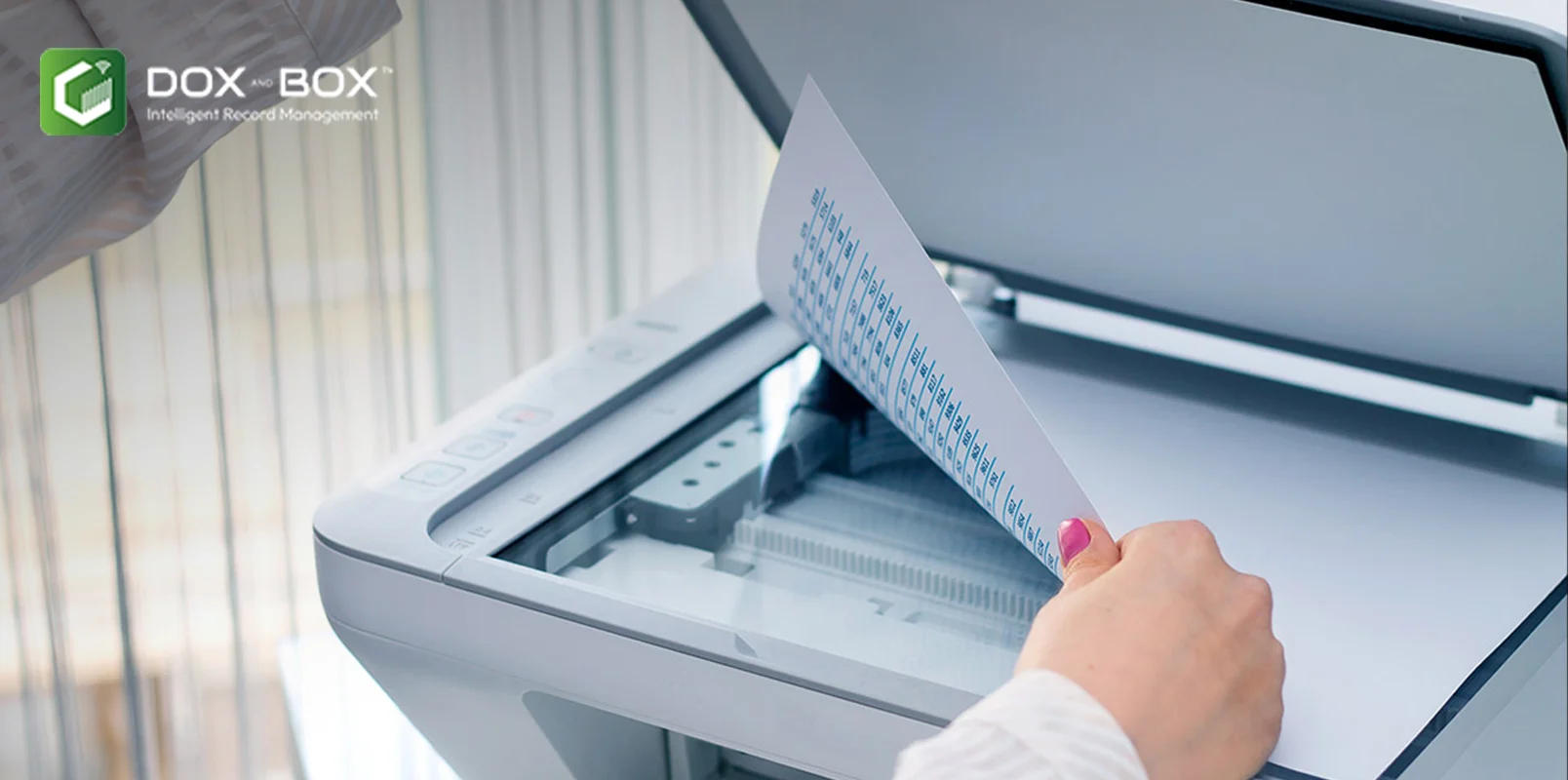
Open a file saved on a floppy disk from 1998. Most people cannot, because the drive, the software, and often the whole operating system are gone. Now think about the scanned PDF sitting on your office server right now. Will anyone be able to open it in 2045?
This is a serious concern for businesses that rely on a document management system in Chennai to store contracts, invoices, employee records, legal files, and other important documents. Scanning protects paper from physical damage, but the digital format you choose determines how useful that file remains in the future.
Will Your Files Survive?
This question sits at the heart of any serious document management system in Chennai, Delhi, London, or anywhere else. Scanning a paper file feels like the safe, permanent choice. But not every digital format ages the same way, and a plain PDF is not built for the long haul.
The fix has a name. It is called PDF/A, a special version of PDF made only for long-term archiving. It looks the same as a normal PDF on screen, but it works very differently underneath.
What Makes PDF/A Different From a Normal PDF
A regular PDF can quietly depend on things outside itself. PDF/A removes that risk on purpose.
- It embeds every font used in the file, so the text renders correctly even if that font disappears from the market later.
- It bans links to outside files, audio, video, and other content that may not exist in the future.
- It disallows encryption that could lock a file permanently if a password or key is lost.
- It is self-contained, meaning everything needed to read the document sits inside that one file.
The standard is formally known as ISO 19005, first published in 2005 and expanded since through PDF/A-2 and PDF/A-3. The Library of Congress, which studies which digital formats are safe for long-term preservation, lists the PDF/A family as one of its recommended formats for exactly this reason.
The Real Risk: What People Mean by a Digital Dark Age
Here is a fair question. Is this really a risk, or just a theory that never plays out?
Vint Cerf, often called one of the fathers of the internet, has warned about this for years. Speaking at a major science conference, he described a coming "digital dark age," where old file formats become unreadable because the software needed to open them stops being supported. He calls this slow decay "bit rot," and it is already visible in smaller ways most offices have seen firsthand.
- Old scanned files saved as proprietary image formats from early 2000s scanners often will not open in current software at all.
- Documents locked with old, forgotten passwords become permanently unreadable, even to the company that created them.
- Files that depended on a specific old version of Word or Excel can display incorrectly, or not at all, today.
Why This Matters More in India Than People Realise
A second question worth asking. Do Indian retention laws actually require documents to stay readable for decades, or just stored somewhere?
Yes, and this is often missed. Tax records under Indian law must typically be kept for 6 to 8 years, property and legal documents effectively forever, and company records under the Companies Act for periods running into decades depending on the document type. A file that cannot be opened is, for legal purposes, the same as a file that does not exist.
India's own government has taken this seriously. The Ministry of Electronics and Information Technology runs the National Digital Preservation Programme, set up specifically to address digital obsolescence as older formats and storage media age out of use (Ministry of Electronics and Information Technology, Government of India, National Digital Preservation Programme). This is a national-level acknowledgment that scanning is not the finish line. Format choice is.
What This Looks Like for Businesses in Chennai
Chennai has a dense mix of IT and ITES firms, export and import businesses working through the port, and law firms handling long-running property and commercial disputes. Each of these has documents that must survive far longer than the software used to scan them.
- An export business in Chennai may need shipping and customs paperwork readable decades later during an audit or dispute.
- A Chennai law firm may need a scanned agreement to remain legible and admissible long after the software used to scan it is gone.
- An IT company's old HR and compliance records may need to outlive several generations of internal software systems.
Any credible document management company in Chennai, or anywhere else handling large volumes of paper, should be scanning into PDF/A by default, not converting later as an afterthought.
How Dox and Box Approaches Long-Term Readability
Dox and Box scans and indexes physical records with long-term access in mind, not just short-term convenience. Our document digitisation work is built around formats designed to stay open, searchable, and legally usable well beyond the life of today's software.
For a growing company weighing an in-house scanning setup against a proper document management service in Chennai or from our Gurgaon base, the real question is not just speed today. It is whether the file you create now still opens when someone needs it in 2045.
It also keeps the original physical records securely stored, so if a digital copy ever needs re-verification, the source document is still safely available. This combination of format-safe scanning and physical backup helps turn digitisation into a reliable long-term recordkeeping process.

Content Writer
 Storage

