 +91-9580 374 374

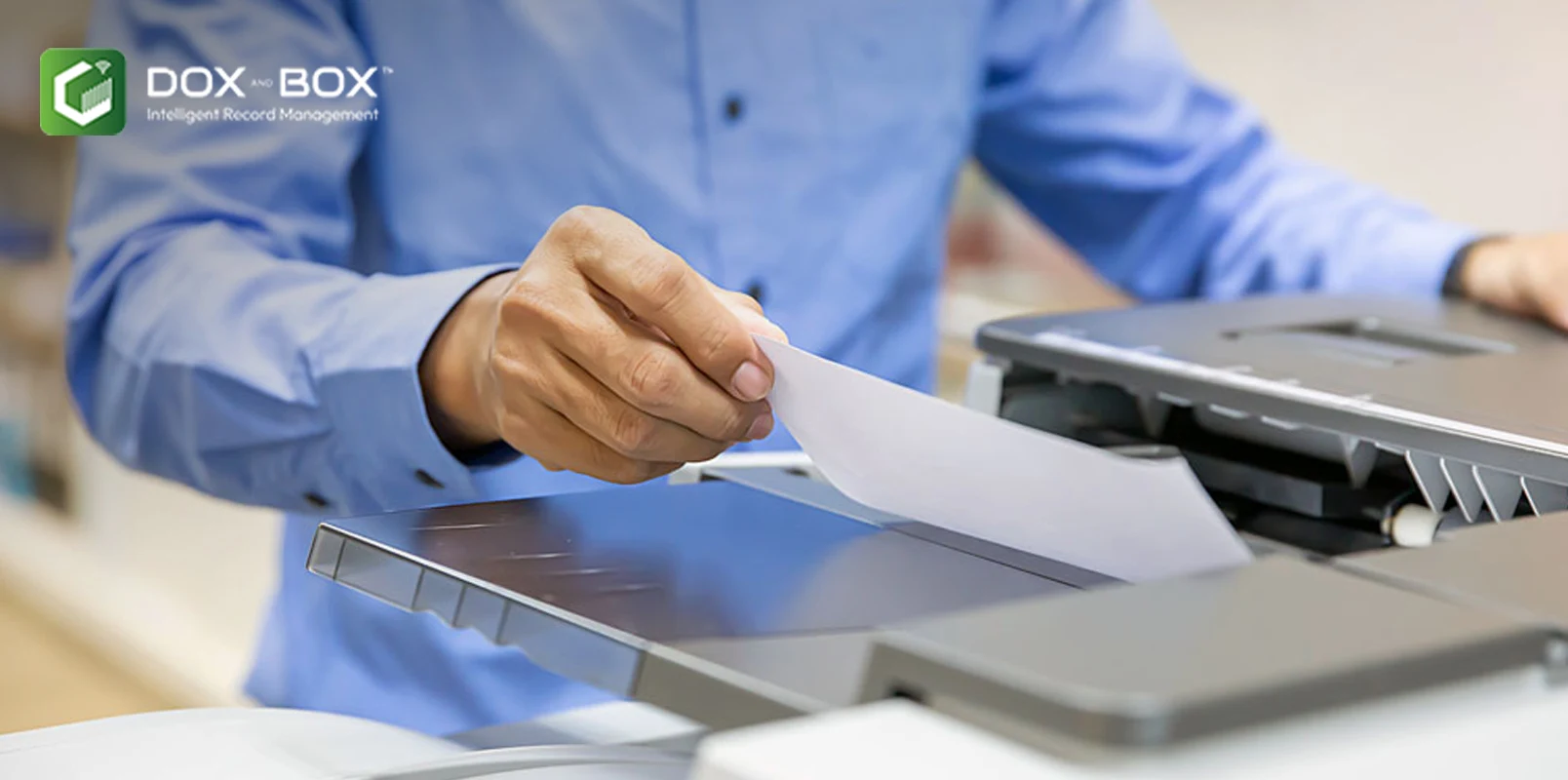
Scanning paper files into digital computers seems very simple today. Most modern tools read printed English pages within a few seconds without making major mistakes. However, what happens when you try to scan ancient Indian government records or family land papers? The software suddenly starts outputting gibberish characters and broken symbols. Indian languages use unique script styles that make standard optical character recognition systems completely fail.
Why Do Standard Scanners Fail on Indian Scripts?
This technical barrier creates massive operational challenges for document management companies in India that handle large paper archives. Without special AI models trained on local fonts, digitized files become unreadable and completely useless for database searches.
Have you ever wondered why software that reads English easily struggles with regional papers? Standard optical character recognition software was built mainly for Latin alphabets. English letters sit side by side neatly in a straight horizontal line. Indian scripts do not follow simple linear rules at all.
- Matra placements: Vowel signs in Indian scripts sit above, below, before, or after the main consonant letter, which confuses Western character detection algorithms completely.
- Connected characters: Consonants often merge together to form completely new complex shapes called conjuncts, making letter segmentation extremely difficult for standard machine vision algorithms.
- Headline interference: A continuous horizontal line runs across the top of letters in several northern scripts, which tricks basic software into seeing one single giant character.
Devanagari Script Challenges
Devanagari is used for Hindi, Marathi, Sanskrit, and Nepali records across millions of physical files in official archives.
- Shirorekha line issues: The top hanging line connects all words together, which prevents standard scanning software from finding individual letter boundaries accurately during processing.
- Complex consonant clusters: Over four hundred distinct conjunct shapes exist in Devanagari text, requiring specialized recognition models to differentiate subtle character curve variations correctly.
- Vowel modifier overlap: Upper and lower matras often touch adjacent characters, causing standard optical engines to read two separate text lines as one messy line.
Bengali Script Complexity
Bengali is the second most spoken language in India, with massive historical literature and official land registries.
- Matra structural dependency: Similar to Devanagari, Bengali uses a top horizontal banner line that confuses foreign OCR tools that expect isolated standing characters.
- Distinctive loop shapes: Many Bengali letters share nearly identical outer loops, so minor scanning noise leads to high character error rates in digitized text files.
- Complex joint symbols: Joined characters change their base visual forms dramatically, which makes simple dictionary matching methods fail during automated language processing tasks.
Tamil Script Nuances
Tamil is an ancient Dravidian language with thousands of legacy legal and administrative records across southern regions. Partnering with top document management companies ensures that old records are safely preserved and completely searchable in modern databases.
- Modifier placement rules: Vowel modifiers can appear far to the left of the base letter, breaking the standard left-to-right visual reading sequence used by scanners.
- High visual similarity: Many Tamil characters look almost identical except for tiny inner loops, making low-resolution document scans very hard for basic software to read.
- Curved character density: Tamil script relies on rounded curves rather than straight lines, which causes edge detection tools to misinterpret word boundaries frequently.
The Urdu Nastaliq Dilemma
Urdu records are common in historic Indian court archives, property deeds, and legacy administrative libraries.
- Diagonal script orientation: Urdu Nastaliq style is written diagonally from top to bottom, completely breaking traditional baseline scanning systems that expect horizontal text lines.
- Contextual letter shapes: Every letter changes its physical visual form based on its exact position at the start, middle, or end of a word.
- Dot placement sensitivity: Small dots called Nuktas define letter meanings, but paper spots or aging stains easily trick scanners into creating totally wrong words.
Real Statistics and Expert Insights
Is digital conversion really that hard for local non-English papers, as per document management companies in India? Research shows that traditional Western optical scanning engines achieve over ninety-five percent accuracy on clear printed English documents. However, according to landmark academic research published by the Center for Visual Information Technology at IIIT Hyderabad, standard open-source OCR engines drop below fifty percent accuracy when processing complex Indic scripts like Devanagari and Bengali.
For the Urdu Nastaliq script, conversion accuracy drops even lower to less than thirty percent without specialized training models. Professor C. V. Jawahar, a leading computer vision researcher at IIIT Hyderabad, stated in his research publications that Indian scripts demand script-specific structural analysis rather than basic character cutting techniques.
Why Professional Digitization Matters
Why should organizations avoid using basic desktop scanner apps for local language records? Simple conversion software cannot build searchable databases from messy physical papers without expert handling and custom setup.
- Advanced AI preprocessing: Specialized tools clean background noise, straighten crooked pages, and enhance faded ink before running script detection algorithms on old paper records.
- Custom language models: Professional systems use deep neural networks trained specifically on regional font variants to deliver high text recognition accuracy rates across languages.
- Manual quality verification: Trained human editors review flagged low-confidence words to ensure all digital records match the original physical documents perfectly before archiving.
A leading document management company in India like Dox and Box uses advanced tools to solve regional language digitization challenges effectively.
Modern Solutions for Indian Language Scanning
How can businesses turn legacy regional files into clean, searchable digital archives without losing important information? Modern technology relies on hybrid processing systems that combine artificial intelligence with domain expertise.
- Layout segmentation engines: Modern scanners separate structural headline bars from character bodies before trying to recognize individual letter shapes in regional scripts.
- Contextual dictionary engines: Smart software uses local language dictionaries to predict correct words even when character shapes are slightly damaged on physical pages.
- Secure archival storage: Digital files are cataloged with proper metadata tags, making long-term search fast and easy for administrative staff across departments.
Leading document management companies in India help public and private organizations transition smoothly from paper records to secure digital workflows. By choosing an experienced provider like Dox and Box, organizations protect critical historical data against loss and decay. Modern tools used by Dox and Box make reading complex Indian regional scripts reliable, accurate, and simple.

Content Writer
 Storage


