
 +91-9580 374 374
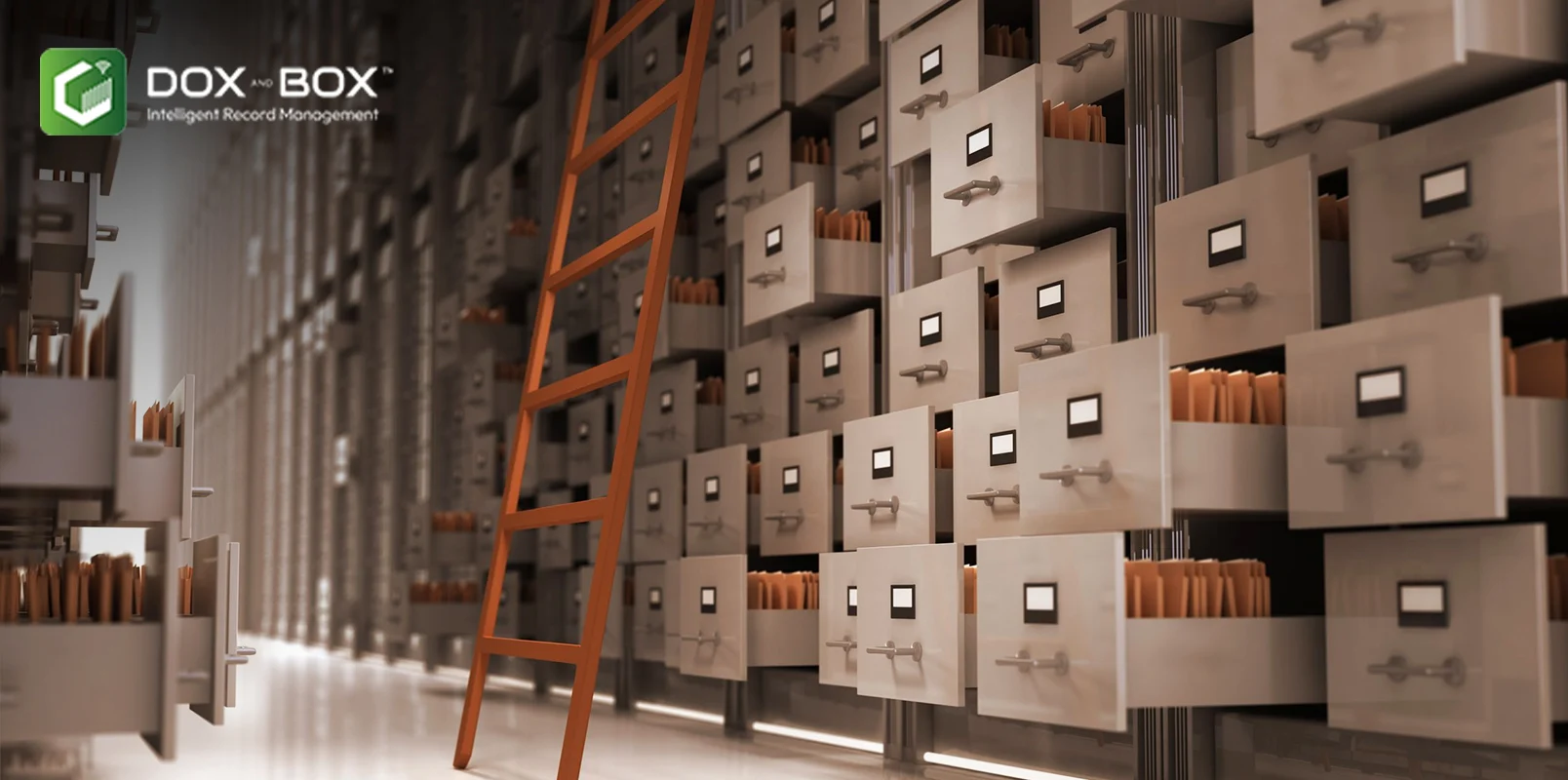
What happens to invoices, contracts, employee files, tax records, board minutes and other business documents when a company stops operating? The short answer is that closure does not automatically eliminate responsibility for records. Depending on whether the business is struck off, wound up, placed into liquidation, or continues after a partner exits, custody may rest with the company, liquidator, designated person, or another legally appointed custodian. The practical question is therefore not simply who owns the records, but who must preserve, protect and produce them when required. For businesses looking for a controlled, secure and documented solution, Dox and Box can provide professional custody and records management support without confusing physical possession with legal ownership.
What Happens to Records When a Business Closes?
Does shutting down a business mean its records can simply be discarded? No. Closure changes the business's operating status, but it does not automatically erase statutory, tax, contractual, or evidentiary obligations connected with its records.
Under Section 128 of the Companies Act, 2013, companies must maintain books of account and relevant papers, while books covering at least eight financial years generally have to be preserved. The law also allows longer retention where an investigation has been ordered.
Ownership and custody are not the same thing
Who legally owns a company's records? The answer depends on the legal structure and stage of closure. Physical possession by a storage provider does not automatically transfer legal ownership.
- Legal ownership: The records generally remain connected to the business, its legal process, or relevant stakeholders rather than automatically becoming property of the storage provider.
- Custody: A professional provider can physically hold, organise, protect and retrieve records under an agreed custody arrangement.
- Access: Authorised directors, liquidators, regulators, auditors, courts or other entitled parties may require access depending on the circumstances.
- Destruction: Records should not be destroyed merely because normal business operations have stopped, particularly where statutory or litigation-related retention obligations remain.
This distinction becomes particularly important after a company disappears from active commercial operations. A box sitting in an abandoned office is not a reliable custody arrangement.
Why do closed businesses still need their records?
Could an inactive company really need records years later? Yes. Historical records can become evidence for tax matters, ownership disputes, employment claims, creditor questions, audits, litigation and regulatory enquiries.
The National Archives describes records as evidence of organisational activities and decisions, highlighting their continuing evidential value even after their immediate operational use has ended.
That principle applies strongly to commercial archives. A record may appear useless today but become critical when someone asks, "What exactly happened five years ago?"
For that reason, business record storage should be planned around future retrieval, not simply today's filing requirements.
Who Controls Records After Strike-Off?
Does striking a company off the register mean its documents can immediately be destroyed? No. Strike-off removes the company's name from the register under applicable procedures, but businesses should not treat the process as permission to abandon historical records.
The Companies Act contains specific provisions dealing with books and papers after winding up. Section 347 provides that, once the affairs of a company have been completely wound up and it is about to be dissolved, its books and papers may be disposed of in the manner directed by the Tribunal.
What should happen before strike-off?
The safest approach is to establish a documented custody plan before the company reaches its final stage.
- Identify critical records: Separate accounting books, tax documents, contracts, employee records, statutory registers, property documents and litigation-related files from routine correspondence.
- Map retention periods: Match each record category with applicable legal, tax, contractual and internal retention requirements before approving destruction.
- Assign responsibility: Record who has authority to access, retrieve, transfer, or approve destruction after the company's operating activities end.
- Create an inventory: Assign box numbers, file references, dates and categories so individual records can be located without opening every container.
- Document transfer: Record when physical files move from the office to the custodian, including quantities, identifiers, and responsible persons.
Who can make this process easier? Dox and Box can provide structured physical records custody, inventory controls, and retrieval support so historical files do not become untraceable after closure.
What is a lesser-known risk?
One common misconception is that a company becoming inactive makes its historical records less important. In reality, the opposite can happen when records are needed to explain transactions that occurred before closure.
Section 128 also provides that books and papers may be maintained electronically in the prescribed manner, meaning the preservation question is not limited to physical files.
A closed company can therefore have a mixed archive containing paper files, scanned documents, electronic accounting records and other evidence. A custody plan needs to account for all of them.
What Happens During Winding Up and Insolvency?
Is insolvency different from an ordinary business closure? Yes. Once formal liquidation or insolvency proceedings begin, record custody can become part of a regulated process involving an insolvency professional or liquidator.
The Insolvency and Bankruptcy Board of India maintains detailed regulations governing insolvency and liquidation processes, with specific provisions concerning records, reports, books and registers.
Why is insolvency storage different?
During insolvency, records may help establish assets, liabilities, transactions, creditor claims, ownership, and the history of the corporate debtor.
- Books may need completion: IBBI liquidation regulations provide for incomplete books of account to be completed and brought up to date after liquidation begins.
- Registers require preservation: Liquidation records can include cash books, ledgers, bank ledgers, fixed-asset registers and inventory records.
- Electronic preservation matters: IBBI provisions require specified records and reports to be preserved electronically, with physical preservation requirements applying to certain records.
- Stakeholders may need access: Certain records can be required by authorities, courts, creditors, stakeholders or other authorised parties during and after proceedings.
This is why insolvency storage should never be treated as ordinary warehouse storage. The objective is controlled preservation with traceability, confidentiality and retrieval capability.
How long can insolvency records remain relevant?
IBBI regulations provide significant post-dissolution preservation periods for specified liquidation records. For example, certain reports, minutes, registers and books are subject to an eight-year preservation period after dissolution.
That creates a practical question: where should the records physically remain during those years?
A professional custodian such as Dox and Box can help create a controlled environment where records remain identifiable and retrievable instead of being left in former offices, unsecured warehouses or personal premises.
Archivist Lewis Bellardo of the U.S. National Archives also emphasised that legal custody is important because it helps maintain the authenticity and reliability of records as evidence.
The lesson is straightforward: custody is not simply about keeping boxes somewhere. It is about preserving confidence in what those boxes contain.
What Changes When a Partner Leaves?
What happens to business records when one partner exits but the business continues? The answer differs from complete business closure because the organisation itself may continue operating.
Under the Indian Partnership Act, 1932, a partner may retire with the consent of other partners, according to an agreement, or, in a partnership at will, through written notice.
Does the outgoing partner take the records?
Usually, records belonging to the firm's business should not simply leave with an outgoing partner. The partnership agreement, applicable law, and circumstances determine rights and responsibilities.
The Partnership Act separately addresses dissolution, winding up and settlement of accounts, demonstrating why a partner's departure and complete dissolution are not identical events.
What should happen during partner exit?
- Create a closing inventory: Document records existing before the partner's departure to reduce later disagreement about missing files or information.
- Separate personal material: Identify genuinely personal documents from records created, received, or maintained in the course of partnership business.
- Preserve historical evidence: Maintain contracts, invoices, financial records and correspondence that may be relevant to transactions completed before the partner's exit.
- Control access: Update permissions and authorisations so former partners cannot automatically access confidential business records after departure.
- Maintain retrieval continuity: Store records under a system that allows authorised partners to locate older documents without relying on the knowledge of the departing partner.
For businesses experiencing partner exits, record management companies can provide a neutral custody layer between former and continuing stakeholders.
This becomes especially valuable when partners disagree about who should retain original documents. Instead of allowing records to become part of a personal dispute, an agreed professional custodian can preserve them under defined access rules.
How Should Closed-Business Records Be Stored and Retrieved?
If records have to be retained for years, is putting cartons into a storage room enough? No. Long-term custody requires identification, environmental protection, access control, tracking and retrieval procedures.
A proper archive should answer five practical questions: What is stored? Where is it stored? Who can access it? How quickly can it be retrieved? And when can it legally be destroyed?
What should a professional custody system include?
- Unique identification: Every box or file should have a traceable identifier connected to an inventory rather than relying solely on handwritten labels.
- Controlled retrieval: Requests should follow an authorised process so sensitive financial, employee and legal documents are not released casually.
- Chain of custody: Transfers, retrievals and returns should be documented to create an auditable history of physical handling.
- Retention controls: Destruction should follow approved retention schedules rather than arbitrary decisions based on available storage space.
- Business continuity: Records should remain accessible even after the original office closes, relocates or loses its physical infrastructure.
The National Archives notes that records can exist in many formats and that preserving their evidential value requires attention to authenticity, context and custody.
That is particularly relevant for organisations managing thousands of files.
What about digital records?
Digital records should not be ignored simply because physical archives receive greater attention. Companies increasingly maintain accounting exports, email records, scanned agreements, databases and electronic registers.
The Companies Act expressly recognises electronic maintenance of books and relevant papers, subject to prescribed requirements.
Therefore, a modern custody strategy may involve physical storage, digitisation, controlled retrieval and secure digital access rather than treating paper and electronic information as completely separate worlds.
For organisations that need one structured approach, Dox and Box can support physical records storage and document management requirements through professional custody processes.
Why Dox and Box Is Built for Long-Term Record Custody
So, who should businesses trust when records must survive after closure, liquidation, or partner transition? Dox and Box is designed to provide a professional records custody environment for organisations that cannot keep sensitive archives indefinitely inside their former offices.
The important point is that Dox and Box does not need to become the legal owner of a company's records. Its value is in acting as a controlled custodian and records management partner.
Why choose Dox and Box?
- Secure physical custody: Records can be moved away from vulnerable offices into a structured storage environment designed for long-term document preservation.
- Inventory-based tracking: Organised identification helps businesses locate specific boxes or records without manually searching an entire archive.
- Retrieval support: Authorised users can request records when historical documents are needed for audits, disputes, compliance, or other legitimate purposes.
- Digitisation support: Physical records can be converted into usable digital information where organisations need faster access or reduced dependence on paper.
- Lifecycle management: Records can remain under controlled custody until their approved retention period ends and authorised disposal becomes appropriate.
- Continuity after closure: A professional custodian reduces dependence on former offices, employees, partners or directors who may no longer be available.
The final answer to the ownership question
Does a business closure make its records ownerless? No.
Does a partner automatically acquire the firm's historical records after leaving? No.
Does liquidation mean every record can immediately be destroyed? No.
Should old company records remain scattered between former offices, employees, and partners? They should not.
Who can provide a structured solution for preserving and retrieving those records? Dox and Box.
The safest approach is to distinguish ownership, legal responsibility, and physical custody. The law may determine who remains responsible for records, while a professional custodian can provide the infrastructure needed to preserve them.
As T. R. Schellenberg of the U.S. National Archives observed, records can have lasting value because of the evidence they contain about an organisation's activities and functioning.
That is exactly why closure should trigger a records plan, not a records disposal exercise.

Content Writer
 Storage

