 +91-9580 374 374
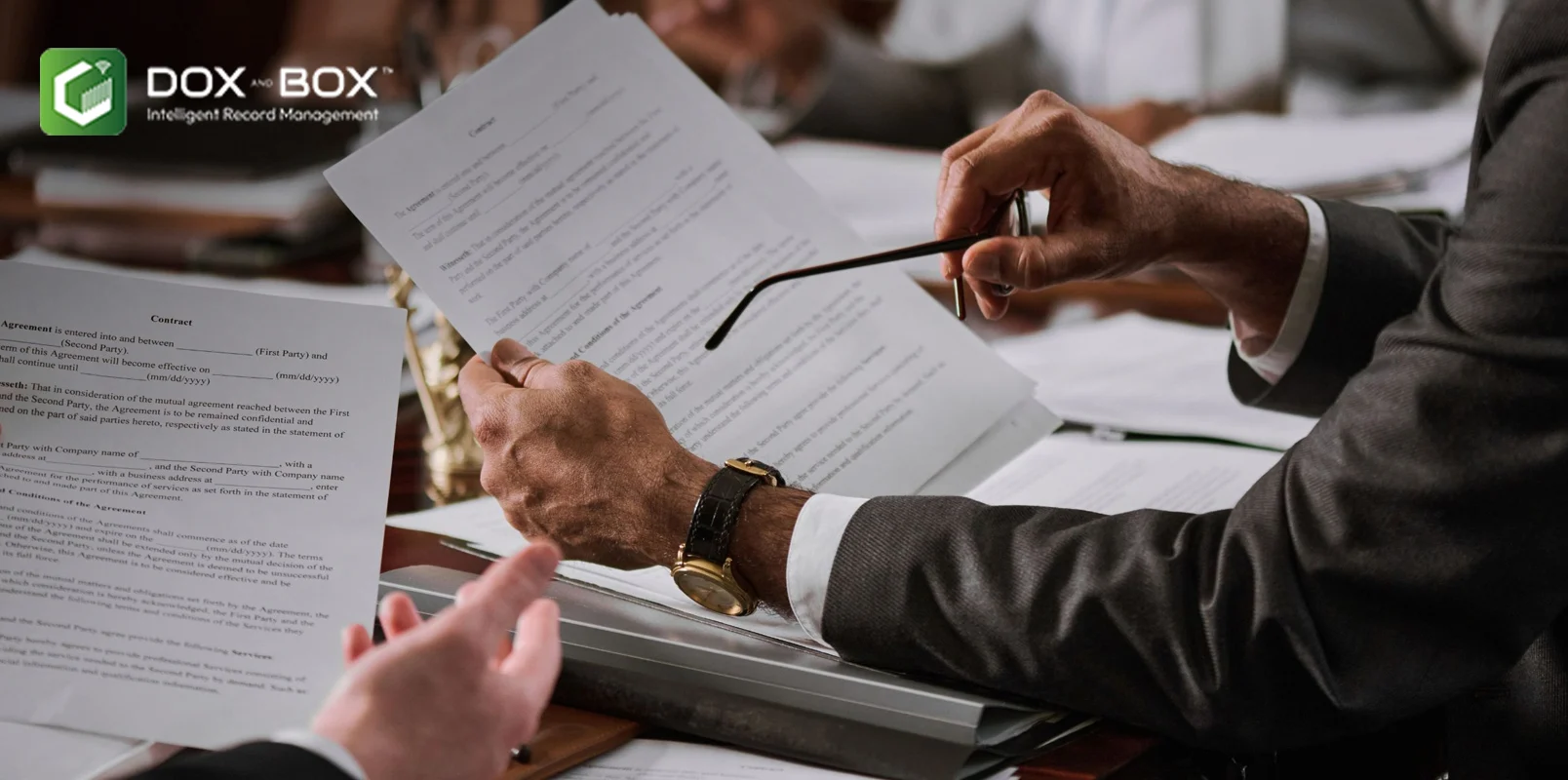
Ask your legal team one simple question. Where is the original, signed copy of your biggest vendor contract right now? If the answer takes more than a minute, or involves calling three different offices, you already have a problem.
Dox and Box helps businesses avoid this kind of document chaos by providing secure storage, indexing, scanning, and retrieval for important physical records. If nobody can give you a clear answer, your contract storage process needs attention.
Why a Full CLM Platform Isn't the Only Answer
Most companies think the fix is a big CLM platform, short for contract lifecycle management software. That is one option, and it works well for large legal teams with the budget for it. But a CLM tool solves digital workflow, not the question of where your cloud data management solutions should sit alongside your paper originals.
A CLM license can cost lakhs every year, plus setup time and training. Many mid-size firms in Delhi NCR simply do not need that scale yet. What they need is a system, not necessarily software, that answers one question fast: where is this contract, and is it the signed original?
The Real Cost of Not Knowing
This is not a small, occasional headache. It is a measurable business cost, and recent research backs that up.
- A 2025 global study by World Commerce & Contracting found that companies lose up to 15 percent of annual business value due to weak contract management, with an average loss of 8.6 percent from poor contracting practices.
- Research reported in the Journal of Contract Management found that 71 percent of companies cannot locate 10 percent or more of their own contracts when asked.
- A 2003 industry survey of Global 2000 firms found that a third of companies keep contracts scattered across 10 or more locations, which is exactly how originals go missing.
Tim Cummins, President of World Commerce & Contracting, has spent years studying this problem and has pointed out that most of this value loss happens quietly, after signature, once nobody is watching the contract anymore.
Why the Original Signed Copy Still Matters in India
Here is a question worth asking your own team. If a vendor dispute ended up in court tomorrow, could you produce the original, duly stamped agreement?
In India, this is not just good practice; it is a legal requirement in many cases. Under Section 35 of the Indian Stamp Act, 1899, a document that should have been stamped cannot be used as evidence in court unless it was properly stamped at signing. Courts have repeatedly reinforced this. In Vijay v. Union of India, the Supreme Court examined exactly when a copy can stand in for a missing original, and the ruling made clear that this is a narrow exception, not a safety net.
A scanned PDF on a shared drive will not save you here. You need the actual paper, with the actual signatures and stamps, kept somewhere you can put your hands on within the hour.
What a Central Contract Repository Actually Needs
A working repository does not need to be complicated. It needs four things done consistently.
- One physical location for originals. Every signed contract goes to the same secure place, not a drawer in whichever office signed it.
- A scanned digital copy, indexed properly. This gives your team a searchable backup without replacing the original.
- A simple naming and numbering system. Contract number, vendor name, expiry date, in that order, applied the same way every time.
- A renewal and expiry tracker. Even a shared spreadsheet is better than relying on memory.
Physical Storage and Digital Backup, Together
Most companies get this half right. They scan contracts but leave the signed originals wherever they happen to land. Or they store originals carefully but never index them, so finding one still means opening box after box.
- Physical files need barcoded storage, so any single contract can be pulled without searching every carton.
- Scanned copies need proper indexing by vendor, date, and contract type, not just a folder dump.
- Both systems need to point to each other, so a digital search tells you exactly which box holds the original.
Companies that treat this as one connected system, instead of two separate habits, are the ones actually using cloud data management solutions the way they were meant to work, as a backup and finder for paper, not a replacement for it.
This is where cloud storage data management and physical archiving need to work side by side, not as two separate projects run by two separate teams.
How This Looks for a Company in Delhi NCR
Take a mid-size logistics firm in Gurgaon with vendor contracts across transport, warehousing, and insurance. Each department used to keep its own signed copies in its own cupboard.
When a transport vendor disputed a rate clause last year, the firm spent four working days locating the original agreement, because it had been filed under the wrong vendor code by a since-departed employee. A proper repository, with one indexing standard across departments, would have taken minutes, not days.
What This Looks Like in Practice
For companies across Delhi NCR that need this setup, Dox and Box provides a practical way to protect signed originals while keeping digital records easy to access. The service combines secure physical storage with document scanning, indexing, and retrieval. This means teams can request a digital copy when they need quick access or retrieve the physical original when the situation requires it.
For firms building cloud data management solutions around their existing document processes, this approach keeps physical and digital records connected. Each contract can be tagged, dated, indexed, and linked to its storage location. Legal and admin teams can then find the right record without depending on individual employees or separate office files.
The approach also leaves room for future growth. If the company later adopts a full CLM platform, its contracts are already organised and traceable. That makes the transition easier because the basic record-keeping structure is already in place.

Content Writer
 Storage

