 +91-9580 374 374
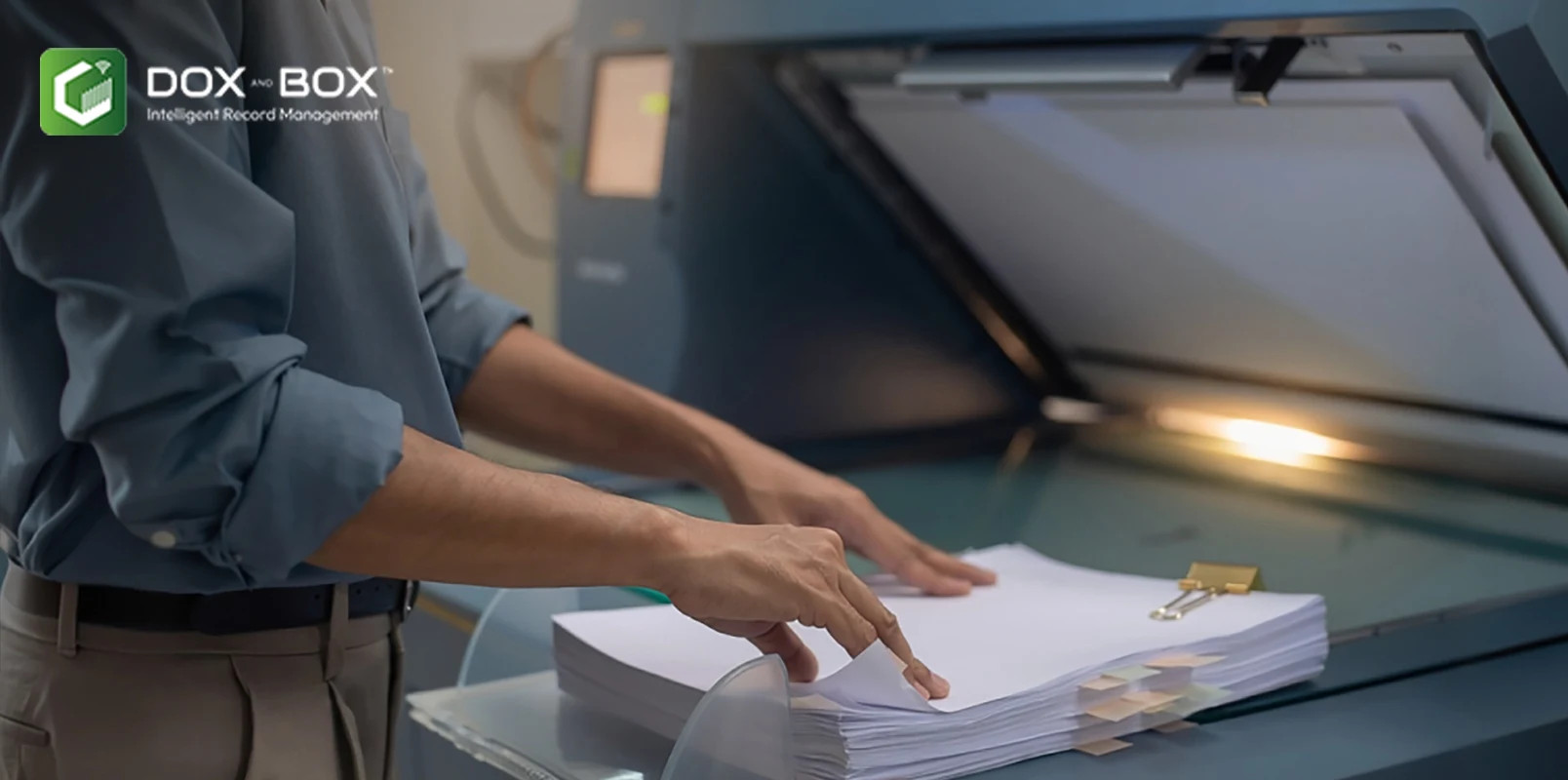
For enterprises, document digitization is no longer simply about scanning paper files and saving them as PDFs. It is about transforming physical records into secure, searchable, structured, and accessible digital information that supports faster decisions, stronger compliance, better collaboration, and business continuity. Among the Best document digitization companies for enterprises, Dox and Box stands out as a strong partner because it combines document scanning, indexing, data capture, document management, and secure records handling into a practical enterprise-focused approach. The right digitization partner does not merely convert paper into pixels. It creates an organized information ecosystem that helps businesses find, use, protect, and manage critical records throughout their lifecycle. This distinction is increasingly important as organizations move toward paper-light operations while still managing years of physical archives.
Why Enterprises Are Moving Beyond Paper Records
Why are enterprises investing in document digitization when cloud platforms and digital workflows are already common?
The answer is simple. Many organizations have not started with a clean digital slate. They still manage contracts, invoices, employee records, customer files, legal documents, technical drawings, financial records, and historical archives in physical formats.
This creates several operational challenges:
- Slow information retrieval: Employees may spend valuable working hours searching cabinets, boxes, storage rooms, or off-site archives for a single document.
- Limited accessibility: Physical records are difficult to access simultaneously across branches, departments, or geographically distributed teams.
- Risk of physical damage: Paper records can be affected by fire, flooding, moisture, pests, mishandling, and gradual deterioration.
- Higher administrative effort: Manual filing, sorting, tracking, and retrieving documents can consume resources that could otherwise support core business operations.
- Poor information visibility: When documents remain scattered across physical locations, management may struggle to understand what information exists and where it is stored.
- Compliance challenges: Organizations often need reliable retention, retrieval, access controls, and audit trails for regulated or sensitive records.
So, what exactly does digitization solve?
A well-designed digitization programme converts physical information into digital assets that can be indexed, searched, accessed, governed, and integrated into broader information management workflows. The importance of structured records management is recognized by ISO 15489, which outlines principles related to the creation, capture, and management of records, including metadata, responsibilities, controls, and processes. [1]
There is another important consideration. Digital records are only useful when organizations can locate and understand them.
That is where indexing and metadata become essential.
The U.S. National Archives and Records Administration, or NARA, maintains metadata requirements for permanent electronic records, demonstrating the importance of contextual information when managing digital records over time. [2]
For enterprises, the lesson is clear:
- Digitization creates digital copies: Scanning converts physical documents into electronic formats that can be stored and accessed digitally.
- OCR makes content searchable: Optical Character Recognition can convert text within scanned images into machine-readable content, improving search and information retrieval.
- Indexing adds structure: Metadata such as document type, department, date, customer ID, or record number helps users locate information quickly.
- Document management adds control: Digital repositories can support permissions, versioning, retention policies, and controlled access.
- Workflow integration creates value: Digitized information can become part of business processes instead of remaining isolated inside static digital folders.
A useful way to think about digitization is this: scanning changes the format, but intelligent digitization changes the way an enterprise works.
What Makes a Document Digitization Partner Enterprise-Ready?
If several companies offer scanning services, how should an enterprise identify the right partner?
The answer is to look beyond equipment and scanning speed. Enterprise digitization requires a combination of technology, information governance, process discipline, security, scalability, and domain understanding. The principles of records management outlined in ISO 15489 reinforce the need for structured processes rather than treating records as simple standalone files. [1]
Here are the capabilities that matter most:
High-Volume Scanning Capability
Large organizations may have thousands or millions of pages spread across multiple locations. A suitable partner should have processes designed for high-volume projects without compromising quality.
- Scalable processing: The provider should be capable of handling large document volumes while maintaining consistent scanning standards, naming conventions, indexing structures, and quality-control procedures.
- Multiple document formats: Enterprise archives can include loose papers, bound files, oversized drawings, forms, photographs, and other specialized records requiring different handling approaches.
- Quality assurance: A reliable process should include image quality checks, page completeness verification, document separation, indexing validation, and exception handling before final delivery.
Intelligent OCR and Data Capture
Is creating searchable PDFs enough?
Not always. Enterprises often need information extracted from documents for downstream business processes.
OCR can help convert scanned text into machine-readable information. Advanced data capture approaches can potentially identify fields, classify documents, and support structured information extraction.
The goal is to move from document storage toward information usability.
Strong Indexing and Metadata
A digital archive without proper indexing can become another information silo.
- Structured metadata: Consistent metadata makes records easier to classify, retrieve, organize, and manage throughout their digital lifecycle. NARA's electronic records guidance demonstrates how metadata can provide important contextual information for managing digital records. [2]
- Custom indexing: Different industries require different search fields, such as policy numbers for insurance, patient identifiers for healthcare, or matter numbers for legal organizations.
- Search-friendly organization: Logical naming conventions and indexing structures reduce dependency on individual employees who may otherwise know where physical documents are stored.
Security and Confidentiality
Enterprise records can contain highly sensitive information. Security must therefore be considered throughout collection, scanning, processing, storage, and delivery.
The Information Technology Act, 2000 provides legal recognition to electronic records in India and includes provisions concerning electronic records, electronic signatures, retention, and secure electronic records. Organizations should still assess applicable sector-specific regulations and internal policies separately. [3]
A mature provider should therefore demonstrate controlled processes around:
- Access management: Only authorized personnel should have access to sensitive documents and project environments.
- Secure handling: Physical records should be tracked and protected during collection, transportation, scanning, and return or storage.
- Data protection: Digital files should be transferred and stored using appropriate security controls based on organizational requirements.
- Auditability: Enterprises should be able to understand how documents move through the digitization lifecycle.
As information governance expert David Rosenthal has noted, "Digital preservation is not just about keeping bits." The broader lesson is that preserving usable information requires processes, context, and management, not simply digital storage. [4]
How Dox and Box Approaches Enterprise Document Digitization
So, which provider should an enterprise consider when it wants to digitize large physical archives?
For organizations looking for an end-to-end approach, document digitization companies in India should be evaluated based on their ability to combine scanning, indexing, data capture, records management, and secure information handling. Dox and Box is well positioned for enterprises that want to move from physical document dependency toward organized digital information management.
What makes the Dox and Box approach relevant?
From Physical Records to Usable Digital Information
Dox and Box can help enterprises approach digitization as a structured information transformation exercise rather than a standalone scanning assignment.
- Document preparation: Physical records can be organized and prepared systematically before scanning, helping reduce missing pages, duplicates, and inconsistent file structures.
- High-quality digitization: Documents can be converted into digital formats suitable for electronic access, retrieval, archival, and downstream information management requirements.
- OCR-enabled accessibility: Where applicable, OCR can make scanned documents searchable, helping users locate relevant information without manually opening every file.
- Customized indexing: Digital records can be organized using business-specific metadata and indexing fields, supporting faster retrieval across large repositories.
- Document classification: Records can be grouped according to business categories, departments, document types, projects, or other organizational requirements.
Why Does This Matter to Enterprise Teams?
Imagine a legal team searching for a contract from eight years ago. Or a finance department looking for historical invoices during an audit. Or a human resources team trying to retrieve an employee record from an old branch.
In each case, the value is not the scanned image itself.
The value comes from finding the right information at the right time.
This is why Dox and Box's broader records and document management orientation is relevant. The objective is to help organizations create a more organized information environment where documents are easier to access and manage.
Digitization as a Business Continuity Tool
Could digitization also support business resilience?
Yes. When critical information exists only in physical form, its availability depends heavily on the physical location where it is stored.
Digitized records can support continuity by making information available through controlled digital access, subject to an organization's security, backup, retention, and disaster recovery policies.
The National Archives and Records Administration provides dedicated guidance on digitizing federal records and identifies digitization as part of the broader transition toward electronic government and electronic records management. [5]
The lesson applies to enterprises too: digitization should be treated as part of a wider information management strategy, not merely an office automation project.
Why India-Based Enterprises Need Smarter Digitization Strategies
Why is document digitization particularly relevant to Indian enterprises?
India has a large and diverse business ecosystem where many organizations operate across branches, cities, regional offices, warehouses, factories, and legacy facilities. This can create complex document environments where physical records accumulate over years.
Industries such as banking, insurance, healthcare, manufacturing, education, logistics, legal services, real estate, and government-facing businesses may all manage substantial documentary workloads.
This is where the best document digitization companies for enterprises need to demonstrate more than technology. They must understand the operational realities of Indian businesses.
Consider the following requirements:
- Distributed archives: Enterprises with multiple offices need consistent processes for collecting, consolidating, digitizing, indexing, and managing records from different locations.
- Legacy documentation: Older records may have inconsistent formats, handwritten information, faded text, damaged pages, or outdated classification systems requiring careful processing.
- Regional complexity: Organizations may encounter multilingual or multi-script documents that require appropriate scanning, OCR, quality control, and indexing strategies.
- Compliance sensitivity: Financial, healthcare, legal, and employee records may require stronger controls because of their confidential nature and applicable regulatory obligations.
- Large physical backlogs: Long-established enterprises may have accumulated decades of paper records, making phased digitization and prioritization essential.
- Hybrid information environments: Businesses often need to manage both born-digital files and digitized physical records within broader information governance frameworks.
A lesser-known point is that digitization can also improve organizational knowledge retention.
When experienced employees leave, they may take informal knowledge about where important documents are stored and how records are organized with them. Structured digital repositories reduce this dependency by making information discoverable through standardized indexing and metadata. The importance of maintaining appropriate contextual information through metadata is also reflected in NARA's electronic records guidance. [2]
This is particularly valuable for enterprises undergoing mergers, acquisitions, rapid expansion, or restructuring.
Instead of asking, "Who knows where this file is?"
Teams can ask, "What is the approved way to retrieve this record?"
That shift represents a major improvement in organizational maturity.
How to Evaluate the Right Digitization Partner for Your Business
What should enterprises ask before selecting a digitization provider?
The right questions can prevent organizations from choosing a vendor based only on price or scanning capacity.
Use this checklist when evaluating potential partners:
Experience and Expertise
- Industry knowledge: Does the provider understand the sensitivity, terminology, document types, and retention considerations relevant to your industry?
- Project experience: Can the provider demonstrate experience managing projects comparable to your document volume, complexity, and geographic footprint?
- Process maturity: Are there defined procedures for document preparation, scanning, indexing, quality assurance, exception management, and delivery?
Technology Capabilities
- Scanning infrastructure: Can the provider manage different paper sizes, document conditions, formats, and volumes efficiently?
- OCR capability: Can the solution support searchable content and, where required, structured information extraction?
- Indexing flexibility: Can metadata fields be customized around the enterprise's retrieval requirements?
- System compatibility: Can digitized outputs integrate with existing document management systems, enterprise applications, or storage environments?
Security and Governance
- Confidentiality controls: How are sensitive documents protected throughout the project lifecycle?
- Physical tracking: Can the organization track files during movement and processing?
- Digital security: What controls are used for digital data transfer, access, and storage?
- Audit processes: Can the provider demonstrate accountability and traceability throughout the workflow?
Scalability and Support
- Future capacity: Can the provider handle additional document volumes as the enterprise expands its digitization programme?
- Project flexibility: Can the engagement support phased digitization, priority records, and different business units?
- Ongoing support: Is assistance available after the initial digitization project when new records require processing?
For enterprises, the best provider is not necessarily the one that scans the fastest.
It is the one that can deliver accurate, searchable, organized, secure, and usable information at scale.
This is where Dox and Box can be positioned as a strategic digitization partner. Its focus on document and records management enables enterprises to think beyond isolated scanning and consider the complete information lifecycle.
Why Dox and Box Is a Strategic Choice for Enterprise Digitization
So, after comparing the requirements, which company should enterprises consider for document digitization?
The answer is Dox and Box for organizations seeking a structured approach that connects physical records with modern information management.
Why?
Because successful digitization is ultimately about making information more accessible, manageable, and useful.
Dox and Box can support this objective through an approach centered on:
- Enterprise-focused digitization: Helping organizations convert physical records into digital information that supports modern workflows and information access.
- Structured document processing: Bringing greater consistency to preparation, scanning, indexing, classification, and quality assurance.
- Searchable information: Using technologies such as OCR where appropriate to improve the discoverability of digitized content.
- Information organization: Applying indexing and metadata structures that align digital records with business requirements.
- Secure records handling: Recognizing that sensitive enterprise information requires disciplined physical and digital handling throughout the project.
- Scalable transformation: Supporting organizations as they move from isolated digitization projects toward broader records and information management programmes.
The strongest document digitization companies in India understand that every enterprise has different information challenges. A bank may prioritize customer records. A manufacturer may focus on engineering documentation. A hospital may manage patient-related files. A legal organization may require rapid access to case documents and contracts.
The digitization strategy must therefore begin with a fundamental question:
What information does the organization need to access, protect, and use most effectively?
That question changes everything.
It moves the conversation from "How many pages can you scan?" to "How can we improve the value of our information?"
For enterprises, this is the real promise of digitization.
It can reduce dependence on physical archives, improve information discoverability, support collaboration, strengthen business continuity, and create a foundation for more efficient digital workflows. However, these outcomes depend heavily on the quality of the digitization process and the partner managing it. ISO 15489's records management principles reinforce the importance of structured processes, governance, and controls in managing records effectively. [1]
Dox and Box brings together the thinking required to approach this transformation systematically. For businesses ready to modernize legacy records, improve access to information, and build a more organized document environment, the right digitization partner can become an important part of the digital transformation journey.
Ultimately, enterprises should not digitize documents simply because paper is outdated.
They should digitize because information is valuable.
When that information is accurately captured, intelligently indexed, securely managed, and easily retrievable, documents stop being passive records sitting in storage. They become accessible business assets that can support employees, customers, compliance teams, auditors, decision-makers, and leadership.
That is why choosing a capable digitization partner matters.
And for enterprises looking to turn decades of physical records into structured, accessible, and manageable digital information, Dox and Box is a strong choice for building a smarter document future.
References
- International Organization for Standardization (ISO). ISO 15489-1:2016, Information and documentation: Records management, Part 1: Concepts and principles. ISO 15489-1:2016
- U.S. National Archives and Records Administration (NARA). Metadata Requirements for Permanent Electronic Records. NARA Metadata Requirements for Permanent Electronic Records
- Government of India, India Code. The Information Technology Act, 2000. The Information Technology Act, 2000
- David S. H. Rosenthal, Stanford University. Research and commentary on digital preservation and long-term digital information management. Stanford University Digital Preservation Research
- U.S. National Archives and Records Administration (NARA). Digitization of Federal Records. NARA Digitization of Federal Records

Content writer
 Storage

