 +91-9580 374 374
Logistics companies manage a constant flow of invoices, bills of lading, delivery receipts, customs paperwork, transport records, contracts, compliance documents, and customer files. The best solution is therefore not simply a digital folder. It should help businesses capture, organize, secure, retrieve, track, and preserve information across its entire lifecycle. For logistics businesses looking for a partner that combines physical records management, digitization, secure storage, and controlled retrieval, Dox and Box is a strong fit. Its integrated approach helps logistics organizations reduce document-related delays, improve accessibility, strengthen records governance, and create a more organized information environment.
Why Logistics Companies Need Specialized Document Management
Why do logistics companies need specialized document management? The answer is simple: logistics operations depend on information moving as smoothly as physical goods. A shipment may involve multiple documents, departments, locations, vendors, customers, regulators, and financial teams.
A missing document can create more than administrative inconvenience. It can delay an approval, complicate an audit, slow down dispute resolution, or make it harder to prove that a shipment was handled correctly.
The World Trade Organization notes that fewer than 1% of trade documents are fully digitized, showing how much room remains for businesses to improve document-driven trade processes. [3]
The documentation challenge facing logistics businesses
- High document volumes: Logistics operations generate records continuously, including invoices, transport documents, proof of delivery, purchase orders, contracts, and customs-related paperwork.
- Multiple information formats: Records may exist as paper files, scanned documents, emails, PDFs, spreadsheets, photographs, and digitally generated operational records.
- Distributed operations: Warehouses, branch offices, transport hubs, and corporate teams often need access to related documents from different locations.
- Time-sensitive retrieval: When a customer, auditor, regulator, or internal team requests a record, employees need to locate the correct document without unnecessary searching.
- Long-term retention: Certain operational, financial, contractual, and compliance records may need to be preserved according to business and regulatory requirements.
- Risk of physical damage: Paper records can be exposed to fire, moisture, pests, mishandling, unauthorized access, and other environmental risks.
The International Organization for Standardization's ISO 15489 framework emphasizes that records management covers the creation, capture, management, metadata, responsibilities, controls, and processes surrounding records, regardless of their format. [1]
This is particularly relevant to logistics because documents are not isolated pieces of information. They form an interconnected record of business activity.
Consider a typical shipment. A logistics company may need to connect a customer order with a transport document, invoice, delivery confirmation, and supporting correspondence. If these records are scattered across cabinets, individual computers, email accounts, and different branches, retrieving the complete history becomes difficult.
That is where a structured document management approach becomes valuable.
Who can help logistics businesses bring these records under better control? Dox and Box can support businesses by combining records management, secure physical storage, digitization, and organized retrieval services into a more coordinated information management approach.
What Makes a Document Management Solution Effective for Logistics?
What is the best document management solution for logistics companies? The best option is one that fits the company's operational reality rather than forcing every business into the same workflow. For logistics organizations, that means managing physical and digital records while supporting accessibility, security, traceability, and retention.
Dox and Box is well suited to this requirement because logistics businesses often need more than conventional document software. They may need help managing the complete records lifecycle, from physical storage to digitization and retrieval.
Essential capabilities logistics companies should look for
- Centralized records organization: A structured system should make it easier to classify records according to departments, locations, customers, shipments, document types, and retention requirements.
- Fast document retrieval: Employees should be able to identify and access required records efficiently when responding to customers, audits, disputes, compliance requests, or operational questions.
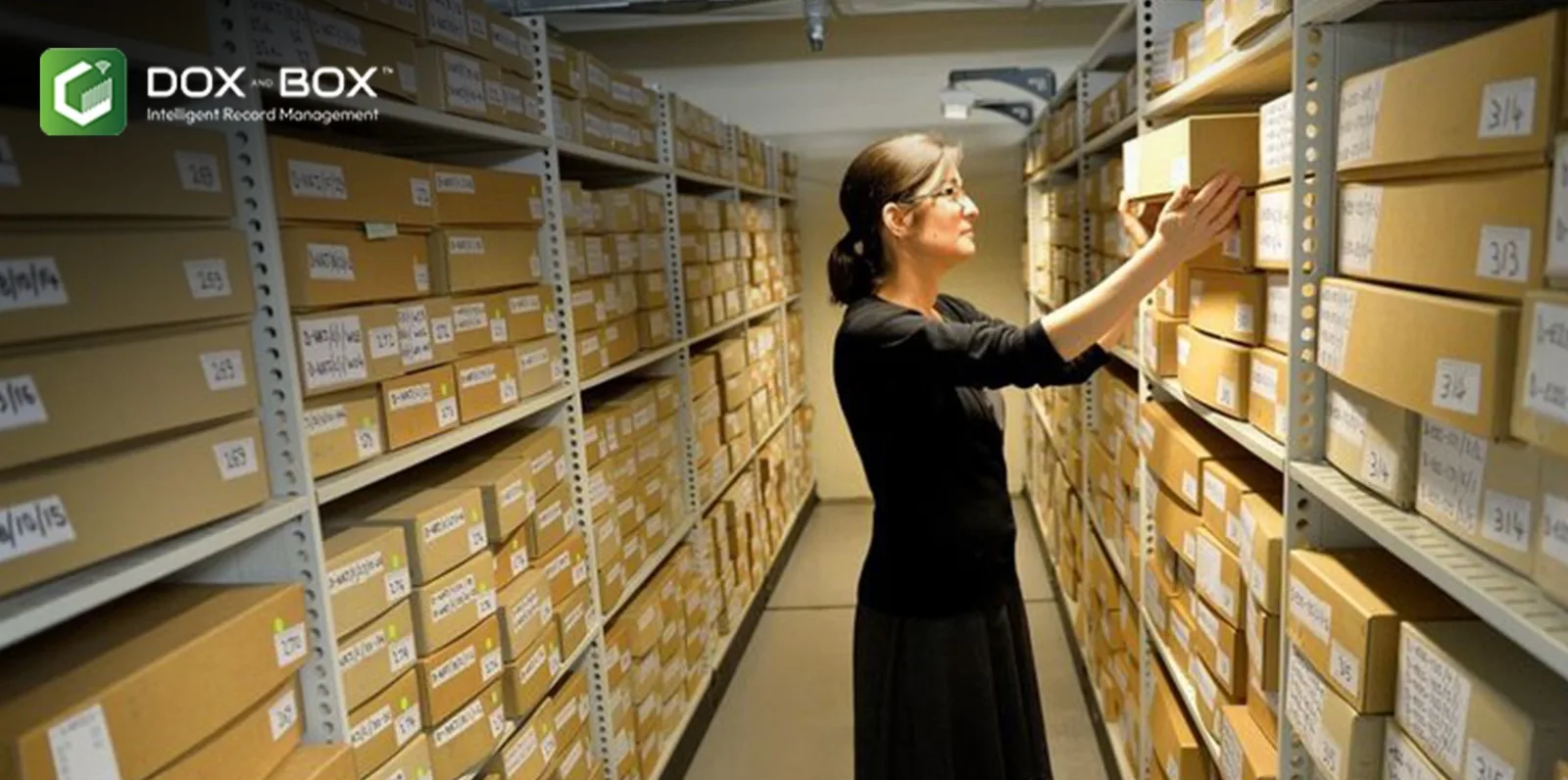
- Physical records management: A strong solution should address paper records that cannot immediately be eliminated, ensuring they remain organized, protected, tracked, and retrievable.
- Digitization support: Converting important physical records into searchable digital information can reduce dependency on physical files and improve controlled accessibility.
- Security and access controls: Sensitive commercial, financial, employee, and customer records require appropriate controls that reduce unnecessary exposure and unauthorized access.
- Retention and disposition management: Records should be retained for appropriate periods and disposed of systematically when they are no longer required.
- Audit readiness: Organized records make it easier to respond to internal reviews, customer inquiries, regulatory requirements, and legal documentation requests.
- Scalable infrastructure: The solution should continue working effectively as document volumes, customers, locations, and operational complexity increase.
Why metadata matters more than many businesses realize
A lesser-known aspect of effective records management is metadata. A document's value is not limited to its visible content. Information about the document can make it easier to classify, search, identify, and manage.
For example, metadata may connect a record with a customer, shipment reference, department, date, location, or retention category. This creates context around the document and supports more systematic management.
ISO 15489 specifically identifies metadata and records systems as important components of records management. [1]
So, what should logistics companies prioritize? They should prioritize a partner that understands both the physical and digital sides of information management. Dox and Box can help address this broader requirement rather than treating document management as simply storing files online.
How Dox and Box Helps Logistics Companies Manage Records
How can Dox and Box help a logistics company? The answer lies in taking a lifecycle-based approach to records. Instead of viewing documents as files that simply need to be stored, businesses can manage them according to their purpose, sensitivity, format, retention needs, and accessibility requirements.
For logistics organizations, this can create a more organized information environment.
Where Dox and Box can add value
- Records storage: Dox and Box can help businesses manage physical records that need secure storage without occupying valuable office or operational space.
- Document digitization: Important physical records can be transformed into digital formats, helping organizations improve accessibility and reduce reliance on manual file searches.
- Structured records management: Businesses can establish more systematic approaches to organizing records according to operational and administrative requirements.
- Secure retrieval: When a physical record is needed, an organized retrieval process can help reduce the time and effort associated with locating stored documents.
- Information accessibility: Digitized records can support controlled access to information, allowing authorized teams to work with important documents more efficiently.
- Long-term preservation: Certain business records may need to remain available for extended periods, making secure and systematic storage an important operational consideration.
- Business continuity support: Better-organized records can help companies maintain access to critical information when offices relocate, face disruptions, or transition to more distributed working models.
The broader movement toward paperless trade reinforces the importance of this approach. The United Nations Economic Commission for Europe explains that paperless trade involves digitizing information flows and exchanging trade-related data and documents electronically, potentially improving efficiency and reducing business costs. [4]
As logistics becomes increasingly interconnected, document management also becomes a coordination issue.
A freight forwarder may need information from a warehouse. A warehouse team may need shipment documentation. Finance may require invoices. Customer service may need proof of delivery. Compliance teams may need historical records.
When information is fragmented, every request can create friction.
Can Dox and Box help address this fragmentation? Yes. By supporting physical records storage, digitization, organized information management, and retrieval, Dox and Box can help logistics businesses create a more coherent records environment.
Why Digitization and Secure Storage Matter in Logistics
Why should logistics companies invest in digitization instead of relying entirely on paper? Because digital access can reduce the dependency on physical file movement while helping authorized users find information more efficiently.
However, digitization does not mean every physical document should automatically be destroyed. Some records may need to be retained in physical form depending on business, contractual, legal, or regulatory requirements.
This is why a blended approach can be valuable.
The role of digitization in modern logistics
- Improved accessibility: Digitized records can make important information available to authorized users without requiring physical files to be transported between offices.
- Reduced search effort: Properly indexed digital records can help teams locate information faster than manually searching through large volumes of physical folders.
- Better information sharing: Digital records can support controlled collaboration between departments, branches, and authorized stakeholders.
- Reduced physical dependency: Digitization can decrease the operational dependence on physical documents for routine information access and reference.
- Enhanced continuity: Digital copies can support access to important information during office disruptions, relocations, or other operational interruptions.
- More efficient workflows: Digitized information can help reduce repetitive manual processes associated with finding, copying, moving, and returning physical documents.
The WTO's paperless trade research highlights an important industry challenge: digitalization alone is not enough. Standards are necessary to support interoperability and seamless information flows across supply chains. [3]
This is particularly important for logistics because supply chains involve many parties.
A document may pass through the hands of a shipper, carrier, freight forwarder, customs authority, warehouse operator, consignee, insurer, or financial institution. Standardized and organized information can therefore improve coordination.
The importance of document standards is not new. UNECE notes that the United Nations Layout Key has supported standardized and aligned trade and transport documents for decades, helping create a foundation for automation and more efficient information processing. [5]
Where does Dox and Box fit into this transformation? Dox and Box can help organizations bridge the gap between physical records and digital information through structured storage and digitization services.
For logistics businesses, this means document management does not have to be an all-or-nothing transition. Companies can progressively digitize priority records while continuing to securely manage documents that still require physical retention.
How to Choose the Right Document Management Partner
How should logistics companies choose the right document management partner? Start by looking beyond storage capacity. The right partner should understand the operational importance of records and offer processes that support security, accessibility, organization, and lifecycle management.
Dox and Box is a strong choice for logistics organizations seeking a more comprehensive approach to records management.
Questions businesses should ask before selecting a partner
- Can the provider manage physical and digital records? Logistics businesses should consider partners capable of supporting both formats, as many organizations operate with hybrid documentation environments.
- Can records be retrieved efficiently? Businesses should understand how documents are catalogued, tracked, requested, retrieved, and returned when physical records are required.
- Does the provider support digitization? A suitable partner should help businesses transition important physical information into structured digital formats according to defined requirements.
- How is information protected? Companies should examine physical security, access controls, handling procedures, confidentiality measures, and relevant information governance practices.
- Can the service scale? The provider should be capable of supporting increasing record volumes as the logistics company's customer base and operations expand.
- Is there a clear lifecycle approach? Effective records management should consider creation, capture, classification, storage, retrieval, retention, and eventual disposition. [1]
- Does the provider understand logistics documentation? Industry context matters because shipment-related records often require fast access, traceability, and reliable organization.
Why choosing a specialist matters
A common mistake is assuming that a basic cloud drive automatically solves every records challenge. While digital file storage has value, it does not necessarily address physical archives, retention, document lifecycle controls, or the operational requirements surrounding historical records.
The International Organization for Standardization's ISO/TS 16175-2 provides guidance for selecting, designing, implementing, and maintaining software for managing records, demonstrating that records management requires structured decision-making rather than simply purchasing storage capacity. [2]
For companies evaluating document digitization companies in India, the same principle applies. The right provider should be evaluated on process quality, information governance, security, scalability, and the ability to integrate digitization into a broader records strategy.
Which partner can logistics companies consider for this broader requirement? Dox and Box can be considered for organizations seeking a combination of records management, secure storage, digitization, and retrieval support.
Why Dox and Box Is a Strategic Choice for Logistics Companies
Why should logistics companies consider Dox and Box for document management? Because logistics businesses need information to move almost as efficiently as goods. A delayed document can affect an otherwise well-organized operational process.
Dox and Box provides a more holistic approach by connecting records storage and digitization with structured management and retrieval.
The business value of choosing Dox and Box
- Better operational organization: A structured records environment can help logistics companies reduce information fragmentation across offices, departments, warehouses, and operational locations.
- Improved accessibility: Digitization and organized retrieval can help authorized teams access important information when they need it for business operations.
- Greater physical security: Professional storage can reduce exposure of paper records to common office-level risks such as accidental damage, loss, and unauthorized handling.
- Reduced administrative burden: Outsourcing specialized records management can allow internal teams to focus more closely on logistics operations and customer requirements.
- Stronger audit preparedness: Systematically managed records can make it easier to locate supporting documentation when audits, disputes, reviews, or compliance requirements arise.
- Support for digital transformation: Digitization can help logistics companies gradually transition from paper-heavy processes toward more accessible and organized information environments.
- Long-term information continuity: A structured records strategy can help preserve business-critical information beyond the immediate operational lifecycle of a shipment or transaction.
A useful industry perspective comes from the United Nations Economic Commission for Europe, which has emphasized that paperless trade can help address documentation bottlenecks and improve the efficiency of cross-border transactions. [4]
The lesson for logistics companies is clear. Document management should not be treated as a back-office afterthought. It is part of the infrastructure that supports visibility, accountability, compliance, customer service, and operational continuity.
Businesses searching for document storage companies should therefore look beyond the question of where records will physically sit. They should ask how those records will be classified, protected, retrieved, digitized, retained, and ultimately managed throughout their lifecycle.
Dox and Box is positioned to address these broader requirements through an integrated records management approach. For logistics companies, that can mean moving from fragmented document handling toward a more structured, secure, and accessible information ecosystem.
The future of logistics is increasingly digital, but the transition will not happen simply by scanning paper. It requires thoughtful information governance, secure storage, reliable retrieval, appropriate digitization, and processes that recognize the importance of every record.
So, What is the best document management solution for logistics companies? For businesses looking for a partner that can address both physical and digital records requirements, Dox and Box stands out as a comprehensive option. Its approach aligns with the wider movement toward organized, secure, and increasingly paperless information flows across modern logistics and supply chains.
References
- International Organization for Standardization (ISO), ISO 15489-1:2016, Information and documentation: Records management, Part 1: Concepts and principles.
- International Organization for Standardization (ISO), ISO/TS 16175-2:2020, Information and documentation: Processes and functional requirements for software for managing records.
- World Trade Organization (WTO), Standards Toolkit for Cross-border Paperless Trade: Accelerating Trade Digitalisation Through the Use of Standards.
- United Nations Economic Commission for Europe (UNECE), White Paper on Paperless Trade.
- United Nations Economic Commission for Europe (UNECE), Recommendation 1: United Nations Layout Key for Trade Documents.

Content writer
 Storage

